What Is e-CMR and How Does It Work in Europe?
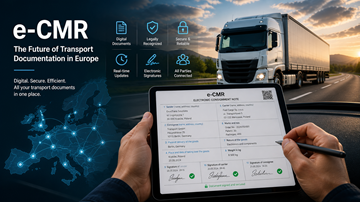
In this guide, you will learn what e-CMR is, how it works in practice, its legal status in Europe, and why it is becoming the standard for modern transport platforms like ExusTrans.
What Is e-CMR?
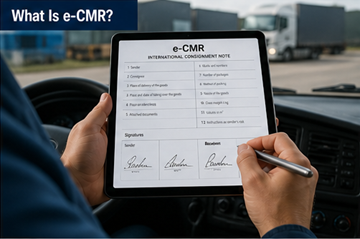
e-CMR is the electronic version of the traditional paper CMR document used in international road transport. It contains the same information as a paper CMR but is created, shared, and stored digitally.
Instead of printing and signing multiple paper copies, all parties involved in the transport process can access and sign the document electronically using smartphones, tablets, or computers.
- Digital version of the CMR document
- Accessible in real time by all parties
- Signed electronically
- Stored securely online
- Integrated with transport platforms
How Does e-CMR Work in Practice?
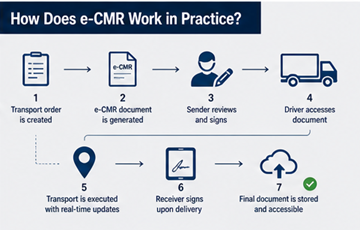
The e-CMR process replaces traditional paperwork with a fully digital workflow. From order creation to delivery confirmation, everything is managed electronically.
- Transport order is created on a platform (e.g., ExusTrans)
- e-CMR document is generated automatically
- Sender reviews and signs digitally
- Driver accesses document on mobile device
- Transport is executed with real-time updates
- Receiver signs digitally upon delivery
- Final document is stored and accessible to all parties
Legal Status of e-CMR in Europe
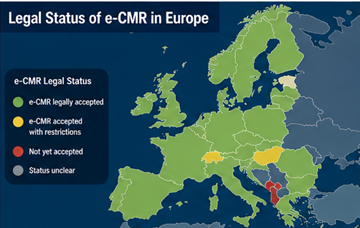
e-CMR is legally based on the additional protocol to the CMR Convention, which allows the use of electronic consignment notes. Many European countries have adopted this protocol, making e-CMR legally valid for international transport.
However, adoption may vary between countries, so it is important to verify whether both the origin and destination countries accept e-CMR.
- Based on the e-CMR protocol (digital extension of CMR)
- Accepted in many European countries
- Legally valid for cross-border transport
- Requires both countries to support e-CMR
- Increasing adoption across the EU
Benefits of e-CMR for Transport
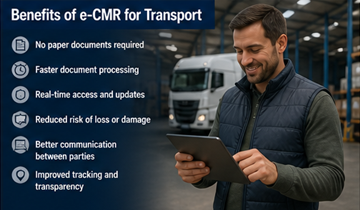
Switching to e-CMR provides multiple advantages for customers, carriers, and drivers. It improves efficiency, reduces errors, and enhances transparency.
- No paper documents required
- Faster document processing
- Real-time access and updates
- Reduced risk of loss or damage
- Better communication between parties
- Improved tracking and transparency
e-CMR vs Paper CMR
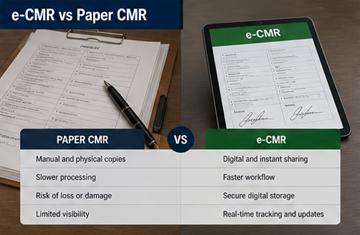
While both documents serve the same purpose, e-CMR offers significant improvements over traditional paper-based processes.
- Paper CMR: manual, physical copies, slower processing
- e-CMR: digital, instant sharing, faster workflow
- Paper CMR: risk of loss or damage
- e-CMR: secure digital storage
- Paper CMR: limited visibility
- e-CMR: real-time tracking and updates
How e-CMR Improves Tracking and Transparency
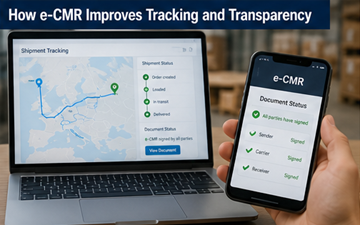
One of the biggest advantages of e-CMR is the ability to track shipments in real time. All updates, signatures, and status changes are recorded instantly.
- Live shipment tracking
- Instant status updates (loaded, delivered, etc.)
- Digital proof of delivery
- Centralized communication
- Full transport history available
e-CMR and Digital Signatures
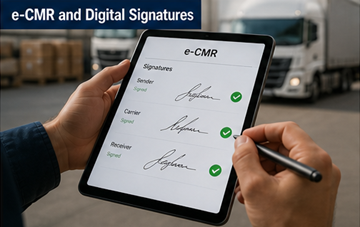
e-CMR documents are signed electronically by all parties involved. These digital signatures replace handwritten signatures and are legally recognized in many jurisdictions.
- Sender signs before transport
- Driver signs during transport process
- Receiver signs upon delivery
- All signatures are stored digitally
- Provides secure and verifiable proof
How Platforms Like ExusTrans Use e-CMR
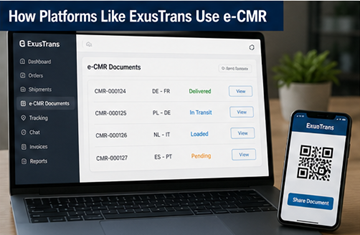
Modern logistics platforms integrate e-CMR directly into their systems. This allows users to manage transport orders, documents, communication, and payments in one place.
- Automatic document generation
- Integrated chat and updates
- QR code tracking and access
- Centralized document storage
- Easy sharing between users
FAQ: e-CMR Explained
Is e-CMR legally valid in Europe?
Yes, e-CMR is legally valid in many European countries that have adopted the e-CMR protocol, but both countries involved in transport must accept it.
Do I still need paper CMR?
In some cases, yes. If one of the countries involved does not support e-CMR, a paper CMR may still be required.
Can e-CMR be signed on a phone?
Yes, e-CMR can be signed using smartphones, tablets, or computers with digital signature functionality.
Is e-CMR secure?
Yes, e-CMR systems use secure digital storage and authentication methods to protect data and ensure document integrity.
What happens if there is no internet connection?
Many systems allow offline data entry and sync the information once the connection is restored.
Is e-CMR better than paper CMR?
Yes, in most cases it is faster, more efficient, and reduces errors, making it the future of transport documentation.
eXus Dev